All products are selected by our Beard Stylish editors. If you buy something through our links as an Amazon Associate we earn from qualifying purchases.
Quick Answer: Beard dye for men is a cosmetic product specifically formulated to color facial hair, covering grey or white hairs and refreshing natural color. It differs from head hair dye in formulation — facial skin is more sensitive, so men’s beard dye uses gentler ingredients at lower developer volumes to minimize irritation.
Why Men Use Beard Dye
Greying facial hair often appears earlier and more noticeably than head hair, making many men feel older than they actually are. Research in men’s grooming behavior consistently shows that the desire to look youthful and well-groomed is the primary driver behind beard coloring. Beyond covering grey, men also use beard dye to:
- Even out patchy or uneven natural beard color
- Darken a beard that appears lighter than head hair
- Experiment with fashion colors (copper, auburn, or even bold tones)
- Restore post-illness color changes caused by stress or medication
Understanding your motivation helps you choose the right product and technique — permanent dye for full coverage, or a temporary beard color for experimentation.
Types of Beard Dye for Men
Not all beard colorants are created equal. The four main categories differ in longevity, coverage, and the chemical processes involved.
1. Permanent Beard Dye
Permanent beard color uses an oxidative process — typically hydrogen peroxide combined with ammonia or ammonia-free formulas — to open the hair cuticle and deposit lasting color. It provides the most complete grey coverage and the most vibrant results, lasting four to six weeks before a touch-up is needed. Because it penetrates the hair shaft, permanent dye is more damaging over time and requires conditioning care.
2. Semi-Permanent Beard Dye
Semi-permanent formulas coat the outside of the hair shaft without fully penetrating it. They contain no developer or peroxide, making them significantly gentler on sensitive facial skin. Color fades gradually over eight to twelve shampoo washes, making semi-permanent dye ideal for men new to beard coloring or those wanting a natural, blended result rather than total grey coverage.
3. Beard Color Gels and Mascaras
Temporary beard color products — including tinted gels, brush-on formulas, and beard mascara — deposit color on the hair surface and wash out with a single cleanse. They’re perfect for special occasions, first-time users, or men who want control without commitment. The trade-off: color can transfer to pillowcases and looks less natural up close.
4. Natural and Henna-Based Beard Dyes
Men seeking ammonia-free, peroxide-free alternatives often turn to plant-based beard dyes using henna, indigo, or cassia. These build color gradually over multiple applications and condition the hair simultaneously. They work best on darker natural shades and are a popular choice for men with skin sensitivities or those who prefer clean-beauty grooming products.
| Type | Longevity | Grey Coverage | Skin Sensitivity |
|---|---|---|---|
| Permanent | 4–6 weeks | Full | Moderate |
| Semi-Permanent | 8–12 washes | Partial to full | Low |
| Temporary gel/mascara | 1 wash | Surface only | Very low |
| Henna / Natural | 3–6 weeks | Partial | Very low |
How to Choose the Right Shade of Beard Dye
Shade selection is where most men go wrong. The common mistake is matching the dye exactly to natural head hair color. In practice, beard hair has a different texture and porosity to scalp hair, which means it absorbs color differently — often darker. Follow these evidence-based guidelines:
- Go one shade lighter than your target color when using permanent dye
- Consider your skin undertone — warm undertones (yellow, olive) suit brown and auburn shades; cool undertones suit ash and dark brown
- Match to eyebrows, not head hair — eyebrow color more closely mirrors natural beard color
- Blend, don’t block — if you have 30–50% grey, a shade two levels lighter than your original color creates a natural salt-and-pepper blend rather than a flat, obvious result
How to Apply Beard Dye at Home: Step-by-Step
Proper application technique is the difference between a professional-looking result and a patchy, uneven disaster. Follow this dermatologist-endorsed process for safe, effective at-home beard coloring.
- Patch test 48 hours before application. Apply a small amount of mixed dye to the inner elbow or behind the ear. If redness, swelling, or itching occurs, do not proceed. Allergic reactions to PPD (para-phenylenediamine), found in many permanent dyes, can be severe.
- Cleanse and dry your beard. Wash with a gentle beard shampoo and allow hair to dry completely. Do not apply to wet hair — water dilutes the formula and leads to uneven uptake.
- Apply a barrier cream. Use petroleum jelly or a dedicated skin protector around your beard line, on ears, and above the lip to prevent skin staining.
- Mix the dye. Follow manufacturer ratios exactly. Never exceed the stated developer-to-color ratio; using more developer does not mean faster or better results — it means increased skin irritation.
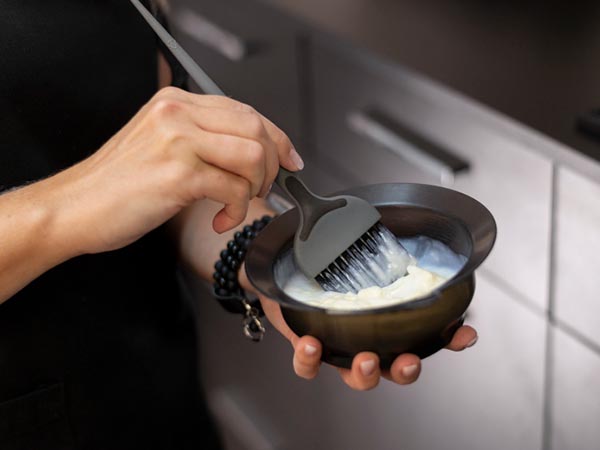
- Apply evenly using an applicator brush. Work in small sections, starting at the grey-heaviest areas. Use a fine-tooth comb to distribute product evenly through dense growth.
- Time carefully. Beard hair is coarser and more resistant than scalp hair, but facial skin absorbs chemicals faster. Most formulas process in 5–15 minutes — always err on the shorter side for first applications.
- Rinse thoroughly with cool water. Remove all product until the water runs clear. Apply the included conditioning treatment to restore moisture and close the cuticle.
? Pro tip from professional barbers: For stubborn grey mustache hairs, apply dye to the mustache two to three minutes after the rest of the beard — mustache hairs tend to be finer and process faster, reducing the risk of an overly dark result.
How Long Does Beard Dye Last?
This is one of the most commonly searched questions about men’s beard coloring, and the answer depends on several factors. Permanent beard dye typically lasts four to six weeks before visible regrowth and fading require a touch-up. Semi-permanent formulas fade more gracefully over eight to twelve washes. Key factors that affect longevity include:
- Washing frequency — daily washing significantly shortens color life; every-other-day cleansing is ideal
- Sulfate content in grooming products — sulfate-free beard wash preserves color considerably longer
- Sun exposure — UV radiation breaks down color molecules; beard balms with SPF protection extend vibrancy
- Product quality — higher-quality formulas with smaller dye molecules penetrate more deeply for longer-lasting results
Is Beard Dye Safe? What You Need to Know
Safety is a legitimate concern, and it deserves a straightforward answer. The primary risk with conventional beard dyes is allergic contact dermatitis, most commonly triggered by PPD — a chemical present in most dark permanent hair and beard dyes. Studies published in dermatology journals estimate PPD sensitivity affects approximately 5–10% of the population, though many people don’t discover this sensitivity until their first exposure.
To minimize risk: always patch test 48 hours before use, choose ammonia-free formulas where possible, limit application time, and never apply dye to broken or irritated skin. Men with eczema, psoriasis, or rosacea should consult a dermatologist before using any oxidative beard dye.
Natural and henna-based alternatives carry far lower sensitization risk, though “black henna” products often contain synthetic PPD and should be approached with the same caution as conventional dyes.
Beard Dye Aftercare: Maintaining Color Between Applications
Color maintenance is as important as the application itself. A consistent aftercare routine extends the life of your beard dye and keeps facial hair healthy through repeated coloring cycles.
- Use a sulfate-free, color-safe beard wash — sulfates strip color-depositing molecules from the hair shaft
- Apply beard oil or beard balm daily — coloring removes natural moisture; replenishing oils prevents brittleness and breakage
- Use a deep conditioning beard mask weekly if you color regularly with permanent dye
- Avoid prolonged sun exposure and chlorinated water immediately after dyeing — both accelerate color fade
- Touch up grey regrowth every three to four weeks rather than redying the entire beard — this reduces cumulative chemical exposure and maintains a more natural blend
Expert insight: Certified trichologist and men’s grooming specialist Marcus Hale advises that men who color their beards every four weeks or more frequently should incorporate a protein-bonding treatment into their routine to counteract the structural damage that oxidative dye causes to the hair shaft over time.
Frequently Asked Questions
Can I use regular hair dye on my beard?
Technically yes, but it’s not recommended. Scalp hair dyes are formulated for the thicker, less sensitive skin of the scalp. Facial skin is significantly more permeable and reactive, meaning the risk of irritation, allergic reaction, and skin staining is much higher. Beard-specific dyes use lower developer concentrations and are pH-adjusted for facial skin. If you must use a head hair dye in a pinch, choose a gentle, ammonia-free formula and reduce the processing time by half.
How do I stop beard dye from staining my skin?
Apply a generous layer of petroleum jelly, coconut oil, or a commercial skin protector (available at beauty supply stores) around your entire beard line, above the lip, and around the ears before applying any dye. Work carefully with your applicator brush at the edges. If staining still occurs, a cotton pad soaked in rubbing alcohol or a commercial hair dye stain remover will lift most staining within a few minutes of application — don’t wait, as stains set quickly on skin.
How long should I leave beard dye on?
Processing time varies by product, but most permanent beard dyes are designed to process in 5 to 15 minutes. Because beard hair is coarser and more resistant to color than scalp hair, first-time users often assume they need longer processing. In reality, facial skin absorbs chemicals much faster than the scalp, so over-processing increases irritation risk without improving coverage. Always follow the manufacturer’s timing instructions and check your progress at the minimum time before extending.
What is the best beard dye for sensitive skin?
Men with sensitive skin should look for PPD-free, ammonia-free formulas with lower developer volumes (10 volume or below). Henna and indigo-based natural beard dyes are the gentlest option and carry the lowest risk of allergic reaction for most users. Semi-permanent beard color products are also a good choice — because they don’t use developer, they avoid the primary chemical triggers of skin irritation while still delivering several weeks of visible color improvement.
Does beard dye damage facial hair?
Repeated use of permanent, oxidative beard dye can cause cumulative structural damage to hair — lifting and roughening the cuticle, reducing elasticity, and causing increased breakage over time. The damage is proportional to the frequency of use and the strength of the developer. Mitigating factors include using ammonia-free formulas, incorporating regular deep conditioning treatments, applying beard oil daily, and spacing applications to every four to six weeks rather than more frequently. Natural dyes cause no oxidative damage and can actually condition the hair through repeated use.
Can beard dye cover white hair completely?
Yes — permanent beard dye provides the most complete coverage of white and grey hairs because it deposits color pigments inside the hair cortex rather than simply coating the surface. However, white hairs (which have lost all natural melanin) can be more resistant to color uptake than light grey hairs. Pre-softening very coarse white facial hair with a conditioning treatment before application can improve dye penetration and result in more even, complete coverage.
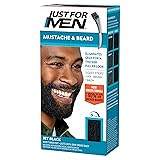
- Just For Men Mustache & Beard, jet black (M-60), is beard coloring specifically formulated for the coarse, thicker texture of facial hair. Unlike other dyes, it restores your natural beard color, thicker and fuller look
- This men’s beard coloring product is easy to use. Simply mix the color base and developer, use the brush to apply, wait five minutes, rinse the product out, shampoo, and you’re done. Be sure to read and follow the enclosed leaflet for the best results
- Choose from 12 different shades ranging from blond to jet black. When in doubt or unsure of which to choose, always go with the lighter shade. Brush included and is designed to distribute color with ease. Now formulated with biotin, aloe, and coconut oil