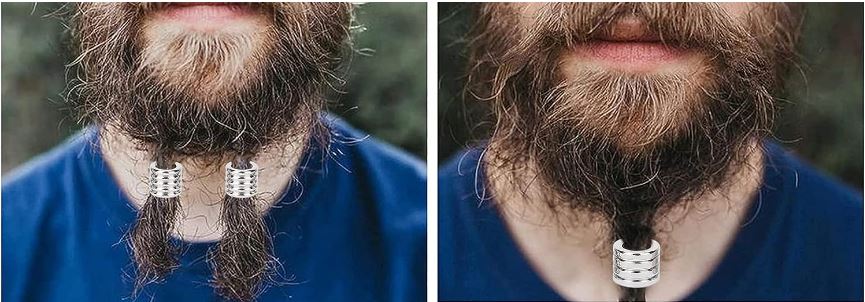
All products are selected by our Beard Stylish editors. If you buy something through our links as an Amazon Associate we earn from qualifying purchases.
Beards have long been more than just facial hair — they are a canvas for self-expression. From the ornate braids of ancient Norse warriors to the statement looks gracing today’s runways and music festivals, beard jewelry has emerged as one of the most distinctive men’s grooming accessories of modern times. Whether you’re drawn to the rugged appeal of Viking beard rings or the refined elegance of decorative beard cuffs, this comprehensive guide covers everything you need to know to wear beard jewelry with confidence.
What is beard jewelry?
Featured snippet answerBeard jewelry refers to decorative accessories — including rings, cuffs, beads, and charms — that are threaded onto, clipped around, or woven into beard hair to add visual interest, personality, and style to facial hair.
Unlike traditional jewelry worn on the wrist or neck, beard jewelry is specifically designed to attach to facial hair without the need for piercing. The accessories are crafted to grip individual strands or braided sections of a beard, making them suitable for a wide range of beard lengths and styles. The term encompasses everything from minimalist metallic rings to intricate cultural ornaments with symbolic meaning.
Search interest in beard accessories has grown consistently alongside the broader men’s grooming movement. Shoppers frequently search for beard rings, beard beads, beard cuffs, and Norse beard jewelry, signalling a strong and evolving demand for this niche category.
A brief history of beard adornment
The practice of decorating facial hair is far from new. Ancient Egyptian pharaohs were depicted wearing elaborate braided and bejewelled beards as symbols of power and divine authority. Viking warriors of the 8th to 11th centuries wove rings and beads into their beards, often incorporating Thor’s hammer pendants and animal-shaped charms that carried spiritual and cultural significance.
In many South Asian and Middle Eastern cultures, beard grooming has historically been tied to prestige and marital status, with fragrant oils and metallic adornments playing a central role in ceremonial dress. The contemporary resurgence of beard jewelry can be traced to the hipster grooming movement of the 2010s, which has since evolved into a mainstream fashion and lifestyle trend embraced across diverse communities worldwide.
Types of beard jewelry
Understanding the different categories of beard jewelry will help you choose the style that best complements your beard length, texture, and personal aesthetic.
⭕
Beard rings
Open-ended metal rings that slide onto individual strands or sections of beard hair. Available in varied gauges and finishes.
?
Beard beads
Cylindrical or rounded beads, often Norse or Celtic in design, threaded along braided beard hair for a textured, layered look.
?
Beard cuffs
Wider, sleeve-style bands that wrap around thicker sections of beard or moustache, often featuring engraved or embossed patterns.
✦
Beard charms
Pendants and ornamental charms attached to rings or beads — popular in Viking, Celtic, and boho-inspired beard styles.
?
Beard wraps
Coloured thread or wire wound around beard braids to add bold colour contrast and a bohemian, festival-ready look.
?
Crystal clips
Gem-studded micro clips designed for shorter beards or moustaches, offering a refined, jewellery-forward aesthetic.
Materials and metals: what to look for
The material of your beard jewelry directly influences its durability, hypoallergenic properties, and overall aesthetic. Here is a breakdown of the most common options:
Sterling silver
Sterling silver beard rings and cuffs remain the most popular choice, offering a classic look that complements most beard colours. Look for pieces stamped with 925 to ensure genuine silver content. Silver develops a natural patina over time, which many wearers consider part of the charm.
Stainless steel
For those with sensitive skin, stainless steel beard accessories offer excellent hypoallergenic properties and corrosion resistance. Surgical-grade stainless steel is a particularly reliable option. These pieces tend to be more affordable and highly durable for everyday wear.
Bronze and brass
Favoured in Viking-inspired and Celtic beard jewelry, bronze and brass offer a warm, aged appearance straight out of the box. These metals develop a distinctive patina over time and are ideal for those seeking an authentic, historically-rooted aesthetic.
Gold-plated and solid gold
Gold beard rings add an unmistakable touch of luxury. While solid gold pieces represent a significant investment, gold-plated stainless steel or brass alternatives provide a similar visual impact at a fraction of the cost.
Expert tip
If you have sensitive skin or experience irritation from metallic accessories, opt for nickel-free or surgical-grade stainless steel beard jewelry. Nickel is the most common cause of contact dermatitis from metal accessories.
How to wear and style beard jewelry
Wearing beard jewelry is simpler than most people expect, but a few practical steps make the experience far more enjoyable and help prevent hair breakage.
Step-by-step: how to put on a beard ring
How to apply beard jewelry1. Identify a section of beard hair (a single strand or small section) where you want to place the ring. 2. Separate and lightly twist the hair into a narrow bundle. 3. Slide the open end of the ring over the tip of the hair. 4. Thread the hair through the ring until it sits at your desired position. 5. Gently close the ring with flat-nosed pliers if needed — avoid crushing the hair.
Styling tips by beard type
Short beards (1–3 cm): Opt for micro beard rings or small crystal clips that attach near the chin or along the jaw line without overwhelming shorter hair.
Medium beards (3–8 cm): This length is the sweet spot for most beard jewelry. Beard cuffs, single rings at the chin, and small beads all work well and stay securely in place.
Long and braided beards (8 cm+): This is where beard jewelry truly shines. Create two or three braids from the chin section and adorn each with beads, threading a decorative charm at the tip for maximum visual impact.
Viking or warrior style: Use multiple Norse beard beads along a central braid, mixing ring sizes and materials for an authentic, layered look. Runic and animal-motif charms elevate the overall aesthetic.
Beard jewelry care and maintenance
Like any accessory, beard jewelry requires basic maintenance to keep it looking its best and to prevent damage to your facial hair.
Remove before washing: Whenever possible, remove beard rings and beads before showering or applying beard oil, as product build-up can dull the metal and cause tangles. If this is impractical, rinse pieces thoroughly with clean water.
Polish regularly: Use a soft, lint-free cloth to buff silver and gold pieces after wear. Jewellery polishing cloths are inexpensive and dramatically extend the life of your accessories.
Store carefully: Keep beard jewelry in a small pouch or divided jewellery box to prevent scratching and tangling. Separating pieces by metal type also minimises the risk of chemical reactions between different metals.
Inspect for sharp edges: Before each use, run your fingertip around the inside of rings and cuffs to check for any rough edges that could snag or break beard hair. If you feel a sharp point, use a jewellery file to smooth it before wearing.
Who wears beard jewelry?
One of the most compelling aspects of beard jewelry is the breadth of its appeal. Viking and Norse history enthusiasts have long embraced runic beads and animal-motif rings as part of immersive living-history and cosplay communities. Festival-goers and bohemian style adopters incorporate beard wraps and crystal clips into free-spirited looks. Fashion-forward men use single, minimalist rings to add a subtle editorial edge to smart-casual outfits. Grooms and wedding parties are increasingly incorporating beard jewelry into their bridal grooming looks, using sterling silver or gold cuffs for a polished, memorable touch.
Beard jewelry also holds deep cultural resonance in Sikh, Rastafarian, and various Indigenous communities, where specific styles of beard adornment carry spiritual and communal significance that extends well beyond fashion.
Frequently asked questions
Does beard jewelry damage your beard hair?
When applied and removed correctly, beard jewelry causes minimal to no damage. The key is to avoid pulling or forcing rings onto hair, and to never use pieces with sharp interior edges. Always thread hair through gently and remove jewelry by sliding it off rather than pulling it out. Using a small amount of beard oil on the section of hair before threading can also reduce friction and breakage.
How long does your beard need to be for beard jewelry?
Most beard rings and cuffs work best on beards of at least 3–4 cm in length, as this provides enough hair to grip securely. Micro rings and crystal clips can work on shorter beards of 1–2 cm. For beads and braided styles, a minimum of 6–8 cm is recommended to create stable, lasting braids.
What is the best material for beard jewelry for sensitive skin?
Surgical-grade stainless steel and solid sterling silver are the best choices for those with sensitive skin. These materials are naturally nickel-free or contain minimal nickel content and are unlikely to cause contact dermatitis. Avoid cheap alloy pieces with unlisted metal compositions if you have a history of skin sensitivity to jewelry.
Can you sleep with beard jewelry in?
It is generally not recommended to sleep with beard jewelry, particularly rings or beads with protruding elements, as these can snag on pillowcases and cause unnecessary pulling on hair. Removing your beard accessories before sleep also significantly extends their lifespan and reduces the risk of breakage or loss.
What is Viking beard jewelry?
Viking beard jewelry refers to beard accessories inspired by the adornments worn by Norse warriors and seafarers during the Viking Age (roughly 793–1066 CE). Common designs include Thor’s hammer (Mjölnir) pendants, runic inscriptions, animal motifs such as ravens, wolves, and serpents, and knotwork patterns. Typical materials include bronze, silver, and iron. Modern Viking beard jewelry is widely available in sterling silver, stainless steel, and bronze finishes.
How do I keep beard beads from falling out?
The most effective way to keep beard beads securely in place is to braid the section of hair before threading the bead onto it. A tighter braid provides more surface area for the bead to grip. You can also apply a small amount of unscented beeswax or beard balm to the braid before threading, which adds texture and friction to help the bead stay put throughout the day.
Is beard jewelry culturally appropriate for everyone?
For the most part, beard jewelry rooted in contemporary fashion — such as minimalist rings, crystal clips, or generic cuffs — is broadly accessible and appropriate for anyone who wears a beard. However, when choosing pieces with specific cultural or spiritual significance, such as certain Norse, Celtic, Sikh, or Indigenous designs, it is worthwhile to research their origins and meaning to ensure your use is respectful and informed.

- Easy clip-on design: Direct placement on a beard section, braid or dreadlock without threading from the end, with simple repositioning for daily styling. Size 20x12x8 mm
- Large opening: hole suits thicker beard sections, braids and selected dreadlocks when matched carefully to strand size.
- 316L stainless steel: The solid metal construction provides a polished silver-tone accent for regular beard and hair styling.