All products are selected by our Beard Stylish editors. If you buy something through our links as an Amazon Associate we earn from qualifying purchases.
Curly beard hair is structurally different from straight hair — and if you’ve been using the wrong products, that explains everything. Here’s what the science says, and exactly what to do about it.
If you have a curly beard, you already know the struggle: frizz that seems to multiply overnight, dryness that no amount of water can fix, and coils that spiral in seventeen directions before you’ve had your morning coffee. The root cause isn’t bad genes — it’s that curly beard hair has a fundamentally different structure that standard grooming routines simply don’t address.
Beard oil for curly beards is one of the most effective tools in your grooming arsenal, but only when you understand why it works, which ingredients actually benefit coily and wavy textures, and how to apply it for maximum definition and softness. This guide covers all of that, built on trichological science and real grooming expertise.
Quick Answer
Beard oil for curly beards works by replenishing the natural sebum that struggles to travel down the curved shaft of coily hair. The best formulas combine lightweight carrier oils (jojoba, argan, sweet almond) with a small percentage of essential oils to moisturize the hair shaft, reduce frizz, define curl pattern, and nourish the skin underneath.
Why Curly Beard Hair Needs Specialised Care
The science of hair texture starts at the follicle. Straight hair grows from a round follicle, producing a uniform shaft. Curly and coily hair grows from an oval or asymmetric follicle, which creates a helical, spiraling strand. This structural difference has two major consequences for beard care:
- Reduced sebum distribution. Your skin produces sebum naturally, but in straight hair it travels easily down the shaft. In curly hair, those twists and bends act like speed bumps — sebum can’t reach the mid-lengths or ends, leaving them perpetually dry.
- Greater surface area exposure. The twisting structure means more of the hair’s cuticle is exposed to friction, heat, and environmental aggressors. This leads to faster moisture loss and a higher susceptibility to damage and breakage.
This is precisely why beard oil for Black men, beard oil for coarse hair, and products specifically designed for wavy and coily textures have grown into their own category. Generic beard oils aren’t engineered for these needs.
The Best Carrier Oils for Curly Beard Hair
Not all oils are created equal. The molecular weight and fatty acid profile of a carrier oil determine how deeply it penetrates the hair shaft versus simply coating its surface. For curly beard hair, you want oils that do both: penetrate to nourish, and coat to seal in moisture.
Jojoba Oil
Structurally similar to human sebum. Absorbs readily without greasiness, balances skin sebum production, and softens coarse texture effectively.
Argan Oil
Rich in oleic and linoleic acids plus vitamin E. Exceptional for taming frizz, adding shine, and protecting against oxidative damage — ideal for curly beard frizz control.
Sweet Almond Oil
High in magnesium and zinc. Strengthens hair structure, reduces brittleness at the curl tips, and provides lasting slip without heaviness.
Castor Oil (blended)
Extremely thick on its own but diluted into blends it promotes beard growth, improves density, and adds serious moisture retention to dry, coily strands.
Penetrates the cortex more deeply than most oils. Best used in small percentages in a blend; too much can cause protein overload in fine curly strands.
Grapeseed Oil
Lightweight and non-comedogenic. Excellent base oil for men with acne-prone or sensitive beard skin who still need deep curl moisturisation.
When evaluating a beard oil label, look for one of these as the primary carrier. Avoid mineral oil and petroleum-derived ingredients — they sit on the surface, block follicles, and provide zero nutritional benefit to the hair shaft.
How to Apply Beard Oil to a Curly Beard: Step-by-Step
Application technique matters as much as the product itself. The wrong method — too much product, wrong timing, wrong tools — turns a premium beard oil into a greasy mess with no definition payoff.
01
Cleanse & Condition
Wash with a sulphate-free beard wash. Follow with a beard conditioner or co-wash to open the cuticle and prepare strands for oil absorption.
02
Apply at 80% Dry
Don’t wait until your beard is fully dry. Applying oil to slightly damp hair seals in existing moisture, dramatically boosting hydration retention.
03
Dispense Correctly
Start with 4–6 drops for short curly beards, 8–12 for longer styles. Rub between palms until the oil is warm and evenly distributed.
04
Work Skin-First
Press fingertips to the skin beneath the beard first. Massage in circular motions. This addresses beardruff, dryness, and follicle health directly.
05
Rake Through Curls
Use fingers or a wide-tooth comb — never a fine-tooth comb — to distribute oil through your curl pattern from root to tip without disrupting coil shape.
06
Scrunch & Define
Scrunch upward gently to encourage your natural curl pattern. Let air-dry for best definition; use a diffuser on low heat if needed.
Beard Oil vs. Beard Balm for Curly Beards: Which Should You Use?
Featured Answer
Beard oil provides moisture and nourishment with a lightweight finish, making it ideal for shorter curly beards and daily maintenance. Beard balm adds hold and shaping ability through beeswax or shea butter, better suited for longer curly beards that need structure. Most men with curly beards benefit from using both: oil as a moisturising base, balm layered over it for definition and control.
A common question in beard grooming communities is whether beard oil or beard balm better serves curly textures. The answer depends on beard length and the level of definition you want. For coily beards with tight curl patterns, the layering method — oil then balm — gives both hydration and enough hold to keep curls clumped and defined throughout the day.
Addressing the Most Common Curly Beard Problems
Beard Frizz
Frizz in curly beards is a moisture-deficit response. When the hair shaft lacks adequate hydration, it absorbs ambient humidity in an uncontrolled way, causing the cuticle to swell unevenly. The fix is consistent beard oil use — particularly oils high in oleic acid, like argan and olive — which smooth the cuticle layer and prevent erratic moisture uptake.
Ingrown Hairs and Razor Bumps
Curly beard hair is predisposed to ingrown hairs because the curved strand naturally curves back toward the skin after cutting. Beard oil conditions both the hair and the skin, keeping the exit point of the follicle clear and supple. Look for formulas with tea tree or eucalyptus essential oils, which have natural antibacterial properties that reduce inflammation around the follicle.
Beardruff (Beard Dandruff)
Dry, flaking skin beneath a curly beard is almost universal in men who don’t moisturise properly. Beard oil’s primary function — beyond hair conditioning — is skin hydration. Applying oil daily, with proper massage technique, keeps the skin’s moisture barrier intact, dramatically reducing flaking and itching.
Lack of Curl Definition
If your curls look stretched, undefined, or simply wavy rather than coily, insufficient moisture is usually the culprit. Restore curl pattern by deepening your moisturising routine: increase beard oil use, introduce a leave-in conditioner beneath your oil, and reduce heat styling which disrupts the curl’s hydrogen bonds.
✦
Expert note: The LOC method for curly beards
Borrowed from natural hair care, the LOC method (Liquid → Oil → Cream) works exceptionally well for dense, coily beards. Apply a water-based leave-in product first, seal with beard oil, then lock everything in with a beard butter or balm. This layering approach can triple the moisture retention of oil applied alone.
How Often Should You Apply Beard Oil to Curly Beard Hair?
For most men with curly or coily beards, once daily is the baseline. However, several factors call for more frequent application:
- Cold, dry climates strip moisture faster — consider twice daily in winter months
- Longer beards have more surface area and greater sebum deficit — apply morning and evening
- Men with naturally dry skin may need oil twice daily regardless of season
- After swimming in chlorinated water or the ocean, always re-apply beard oil to replace stripped moisture
The sign you’re overusing beard oil is a greasy, heavy feel that doesn’t absorb within a few minutes. Scale back the quantity — not the frequency — if this happens.
What to Look for on a Beard Oil Label
Reading ingredient labels is a non-negotiable skill for anyone serious about curly beard care. Ingredients are listed in order of concentration, so the first five entries tell you the most about the product’s character. For curly beard oil, the ideal label prioritises: a quality carrier oil in position one or two, a blend of complementary carriers, essential oils in single-digit percentages only (over-concentrated essential oils irritate skin), and no synthetic fragrance compounds, alcohol, or silicones.
Silicones deserve special mention. Cyclopentasiloxane and dimethicone are common in hair products and provide instant smoothness — but they coat the hair shaft without penetrating, accumulate over time, and ultimately block moisture from reaching where it’s needed. For curly beard textures that are already moisture-deprived, this is counterproductive.
Frequently Asked Questions
Can beard oil help straighten or loosen my curly beard?
Beard oil will not permanently change your curl pattern — that is determined by follicle shape and genetics. However, well-moisturised curls sit with more weight and elongation, which can give a slightly looser appearance. If you want to temporarily straighten a curly beard, use a boar bristle brush with beard oil while applying gentle tension and heat from a low-setting dryer.
Is beard oil safe for sensitive skin under a curly beard?
Yes, with the right formulation. Opt for fragrance-free or minimally scented beard oils with short ingredient lists. Jojoba and grapeseed carrier oils are among the least likely to trigger reactions. Patch test any new beard oil by applying a small amount to the back of your wrist and waiting 24 hours before using on your face.
How long does it take for beard oil to improve a curly beard?
Immediate effects — softness, reduced frizz, improved manageability — are noticeable from the first application. Cumulative improvements in beard health, including stronger strands, reduced breakage, and more consistent curl definition, typically become apparent after two to four weeks of daily use.
Should I use beard oil before or after beard balm on a curly beard?
Always apply beard oil first. Oil is a lightweight moisturiser that penetrates the hair shaft and skin. Beard balm contains waxes that form a barrier on the hair’s surface — applying it first would prevent the oil from being absorbed properly. Oil goes on damp hair, then balm is worked over the top to add hold and seal in the moisture.
What is the best beard oil for Black men with coily beards?
For 4a–4c coily beard textures, look for beard oils with a high concentration of penetrating oils like castor, sweet almond, or avocado alongside jojoba as the base. Shea-butter-enriched beard oil blends or oils that include mango butter are also excellent for Type 4 coils, providing the deep conditioning that tighter curl patterns demand. Avoid light, watery formulas designed for straight or wavy textures — they lack the density to reach the inner cortex of coily strands.
Can I make my own DIY beard oil for curly beard hair?
Yes, and it can be highly effective. A simple base for curly beard hair: 50% jojoba oil, 30% sweet almond oil, 15% argan oil, and 5% castor oil. To 30ml of this blend, add 5–8 drops of a skin-safe essential oil such as cedarwood (for growth) or lavender (for soothing). Store in a dark glass dropper bottle and use within six months.
Does beard oil help beard growth in curly beards?
Beard oil does not directly stimulate new follicular growth, as that is primarily determined by testosterone and DHT levels. However, it supports the optimal conditions for healthy growth: a moisturised, unclogged follicle environment, reduced breakage at the tips (which preserves length), and a healthier scalp microbiome. Over time, this contributes to a fuller, longer-looking curly beard even if the oil isn’t technically a growth stimulant.
Your curly beard deserves more than average grooming.
Commit to a consistent beard oil routine tailored to your curl type — the difference in texture, definition, and overall health is measurable within weeks.
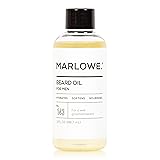
- BEARD CARE MADE EASY: Your beard can be your best asset. But only when it’s properly groomed. Our lightweight and fast-absorbing beard oil for men helps condition your beard, add moisture back to dry, itchy skin, and hydrate hair for a well-groomed look. Moisturizes hair and skin for a fuller, well-groomed look. Beards everywhere, this one’s for you
- HYDRATES, SOFTENS, NOURISHES: Formulated with Sunflower, Safflower and Soybean oils, these nourishing oils condition for a more manageable beard. Moisturizes and softens hair into a well-kept, yet natural look in seconds. Just a few drops daily restores style and shine, and will keep your beard deeply nourished and well maintained
- CLEAN. PURPOSEFUL. FRAGRANCE-FREE: This beard softener provides sleek, manageable facial hair without any lingering fragrance, making it suitable for all skin types, fragrance-sensitive users, and those who prefer minimal routines. Keep it on your bathroom shelf, in your gym bag, or travel kit, for easy grooming