All products are selected by our Beard Stylish editors. If you buy something through our links as an Amazon Associate we earn from qualifying purchases.
If you’ve ever wrestled with a coarse, wiry, or tightly coiled beard that refuses to lay flat or feels rough to the touch, a beard relaxer might be exactly the grooming solution you’ve been searching for. In this comprehensive guide, we’ll walk you through everything you need to know — from what beard relaxers are and how they work, to how to apply them safely and which hair types benefit most.
What Is a Beard Relaxer?
A beard relaxer is a chemical or keratin-based grooming treatment designed to loosen the natural curl pattern of facial hair, making the beard appear straighter, smoother, and significantly easier to manage. Unlike heat styling tools, a beard relaxer works at the structural level of the hair shaft, altering or temporarily softening the protein bonds that give your beard its natural texture.
Beard relaxers are available in several formulations — including lye (sodium hydroxide), no-lye (guanidine carbonate or calcium hydroxide), and keratin-infused varieties. Each has its own strength level, processing time, and suitability depending on your beard’s thickness and curl tightness.
Featured snippet answer
A beard relaxer is a grooming product that chemically or thermally alters the curl pattern of facial hair to make it softer, straighter, and easier to style. It works by breaking down disulfide bonds in the hair’s cortex, allowing the curl to be loosened before the bonds are reformed in a new configuration.
How Does a Beard Relaxer Work?
To understand how beard relaxers function, it helps to know a little about beard hair structure. Your facial hair contains disulfide bonds — strong chemical links between sulfur atoms in the keratin protein chains. These bonds are what give your beard its curl, wave, or coil pattern.
A chemical beard relaxer penetrates the outer cuticle layer and breaks those disulfide bonds. Once broken, the hair can be shaped into a straighter configuration. The process is then neutralised — either with a neutralising shampoo or through the relaxer’s own chemistry — which reforms the bonds in the new, loosened pattern.
Keratin beard treatments, sometimes marketed as “beard straightening treatments,” work differently: they coat the hair shaft with hydrolysed keratin protein, smoothing the cuticle and temporarily reducing frizz and curl without permanently altering the bond structure.
“The key difference between a temporary beard softener and a true beard relaxer lies in whether the treatment alters the internal protein bonds of the hair — permanent change versus surface-level smoothing.”
Types of Beard Relaxers
1. Lye Relaxers (Sodium Hydroxide)
Lye relaxers are the strongest option. They use sodium hydroxide (NaOH) at a high pH to break bonds rapidly. They’re typically faster-acting and highly effective on very coarse, tightly coiled beard hair — but they require precise timing to avoid chemical burns or excessive damage.
2. No-Lye Relaxers
No-lye relaxers use guanidine carbonate or calcium hydroxide as the active ingredient. They’re milder than lye-based formulas, making them better suited for sensitive skin. However, they can still cause dryness with repeated use, so deep conditioning is essential afterward.
3. Keratin Beard Treatments
Often called beard straightening treatments or Brazilian beard treatments, these use formaldehyde-free keratin to smooth and relax the beard temporarily. Results typically last 4–8 weeks. They’re ideal for men who want softness and manageability without the permanence of a chemical relaxer.
4. Natural and Organic Relaxers
These formulations rely on plant-based ingredients like amla oil, coconut milk, or shea butter to soften and loosen curl patterns over time. Results are subtle and gradual, but they’re the gentlest option — ideal for men with sensitive skin or those new to beard relaxing.
Who Should Use a Beard Relaxer?
Beard relaxers are particularly beneficial for:
- Men with type 4 (coily or kinky) facial hair who struggle with tangles, shrinkage, and dryness
- Men with type 3 (curly) beards seeking more definition and length
- Men who find beard grooming time-consuming due to excessive frizz or unruly texture
- Anyone experiencing beard itch or prickliness caused by coarse, curled hair tips
- Men who want to grow a longer beard but struggle with the “mushroom” or “puff” effect from heavy curl shrinkage
If you have already colour-treated or bleached your beard, proceed with extra caution — combining chemical processes on the same hair significantly increases the risk of breakage and damage.
How to Apply a Beard Relaxer Safely
Applying a beard relaxer incorrectly is one of the most common causes of beard damage. Follow these steps for a safe, effective result.
01
Patch test 48 hours before full application to check for skin sensitivity
02
Apply petroleum jelly along the skin at your beard line to protect against irritation
03
Apply relaxer cream evenly using a wide-tooth comb or gloved fingers, section by section
04
Time strictly — most beard relaxers process in 5–15 minutes; never exceed recommended time
05
Rinse thoroughly with lukewarm water, then apply a neutralising shampoo to halt the process
06
Deep condition immediately with a moisturising beard mask or conditioner
“Always do a strand test before applying any chemical relaxer to your full beard. This helps you gauge processing time and assess potential damage risk for your specific beard texture.”
Beard Relaxer Aftercare: Keeping Your Beard Healthy
A relaxed beard requires consistent moisture and protein replenishment. The chemical process opens the hair cuticle and removes natural oils, so your aftercare routine needs to compensate.
- Moisturise daily — use a beard oil rich in argan, jojoba, or sweet almond oil to restore hydration
- Use a leave-in conditioner — this helps maintain softness between washes
- Avoid heat styling for at least two weeks post-relaxer to prevent protein loss
- Use sulfate-free beard shampoo — harsh detergents strip moisture from chemically treated hair
- Deep condition weekly — protein treatments help rebuild and strengthen the hair shaft
- Detangle gently — use a wide-tooth comb or your fingers; avoid stiff bristle brushes on freshly relaxed beards
Potential Risks and How to Avoid Them
Like any chemical treatment, beard relaxers carry risks when misused. Being informed is your best protection.
- Over-processing: Leaving relaxer on too long causes breakage and elasticity loss. Always time strictly.
- Scalp and skin irritation: The chemicals in lye relaxers can cause burns on sensitive skin. Always perform a patch test.
- Overlapping: Applying relaxer to previously treated hair (rather than just new growth) causes cumulative damage.
- Dryness and brittleness: Chemical treatments reduce the hair’s natural moisture retention. Deep conditioning is non-negotiable.
If you experience any burning, intense tingling, or visible irritation during application — rinse immediately with cool water and do not reapply.
Beard Relaxer vs. Beard Straightener: What’s the Difference?
These terms are often used interchangeably, but they refer to different processes. A beard relaxer typically refers to a chemical treatment that permanently (or semi-permanently) loosens curl. A beard straightener usually refers to a heat tool — a flat iron or heated beard brush — used to temporarily straighten hair with applied heat.
Both can be effective. The right choice depends on how permanent a change you want, your commitment to aftercare, and your tolerance for chemical processing. Many men combine both: using a chemical relaxer to reduce curl significantly, then using a gentle heat tool for final styling.
Frequently Asked Questions
How long does a beard relaxer last?
A chemical beard relaxer permanently alters the treated hair, so results last until the hair grows out — typically 6–12 weeks before noticeable new growth appears. Keratin-based beard treatments are temporary and usually last 4–8 weeks depending on how often you wash your beard.
Can I use a hair relaxer on my beard?
Technically yes, but it is not recommended. Scalp hair relaxers are formulated for a different hair texture and thickness than facial hair, and they may be too strong for the coarser structure of beard hair and the more sensitive facial skin. Always use a product specifically formulated for beard or facial hair.
Is a beard relaxer safe for sensitive skin?
A no-lye relaxer or keratin treatment is generally safer for men with sensitive skin. Always perform a 48-hour patch test before full application, and apply petroleum jelly along the beard line to create a barrier between the chemical and your skin.
How often should I relax my beard?
Most grooming professionals recommend waiting at least 8–12 weeks between chemical relaxer applications. Reapplying too soon — especially overlapping onto already-treated hair — dramatically increases the risk of breakage and long-term damage.
Will a beard relaxer make my beard grow faster?
No — beard relaxers do not affect hair growth rate, which is determined by genetics and hormones. However, by reducing curl shrinkage, a relaxer can make your beard appear longer and allow you to achieve a longer, more elongated look more easily.
Can I colour my beard after relaxing it?
It is strongly advised to wait at least two weeks between relaxing and colouring your beard. Combining two chemical processes in a short period significantly stresses the hair shaft and greatly increases the risk of severe breakage. Consult a professional barber or trichologist if you want to do both.
What’s the best beard oil to use after a relaxer?
Look for beard oils rich in argan oil, jojoba oil, castor oil, or sweet almond oil. These penetrating oils help restore moisture and flexibility to the hair shaft after chemical processing. Avoid products with alcohol high on the ingredient list, as these will dry out an already-compromised beard.
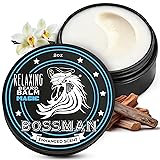
- Nourishing Balm: Bossman beard softener balm features natural ingredients such as mango and shea butter to hydrate and retain moisture in the hair follicles and pores. It keeps your beard healthier and fuller.
- Effective Tamer: Our balm controls flyaways and frizz while giving your beard shape, structure, and a clean finish. It keeps your beard moisturized, soft, and manageable. Provides light hold for everyday styling.
- Moisturizing & Soothing: Our beard wax is filled with premium, natural minerals and oils that retain key hydrating agents and treat dry, dull, scratchy beards. Your beard will look and feel thicker and silky smooth.