All products are selected by our Beard Stylish editors. If you buy something through our links as an Amazon Associate we earn from qualifying purchases.
If you’ve put months — or years — into growing your beard, you already know that length comes with responsibility. Tangles, dryness, uneven growth, and flyaways become daily battles. The single most effective tool for fighting all of them at once? A quality beard brush built specifically for long beards.
Not all beard brushes are created equal. A brush designed for a short, well-groomed stubble will snag, break, and frustrate when used on a beard that grazes your chest. This guide walks you through exactly what separates a great long-beard brush from an average one — and how to build a grooming routine that keeps your beard looking intentional, healthy, and full.
Quick Answer
The best beard brush for long beards uses 100% boar bristles (medium to firm grade), features a wide paddle or cushion base for even tension distribution, has a comfortable ergonomic handle, and is sized to cover substantial facial coverage in a single stroke. Boar bristle brushes excel at distributing natural sebum and beard oil from root to tip without causing breakage in longer, coarser hair.
Why Long Beards Need a Specialized Brush
Most standard beard brushes target short-to-medium beards — typically two to four inches. These brushes have densely packed, short bristles designed to tame light frizz and distribute a small amount of product. When used on long beards, however, they tend to create more problems than they solve: bristles catch on coarser mid-shaft and tip sections, tension pulls unevenly from the root, and the brush surface area is simply too small to work through the volume of hair efficiently.
Long beard grooming requires tools that work with the beard’s structure. That means longer, more flexible bristles, a broader surface area, and a handle designed for longer, sustained strokes rather than quick touchups.
“A brush is to your beard what a good comb is to your hair. But for long beards, it does something a comb can’t — it trains the hair, conditions it, and gives it direction over time.”
Bristle Types: What Actually Matters
The bristle material is the most consequential choice you’ll make when selecting a beard brush. Here’s how the main options compare:
Boar Bristle
- Best for sebum distribution
- Naturally conditions beard hair
- Reduces frizz and flyaways
- Medium or firm grade for long beards
- The gold standard for most men
Synthetic / Nylon
- Vegan and cruelty-free option
- More rigid, good detangling
- Doesn’t distribute oils as well
- Easier to clean thoroughly
- Better for very coarse, thick beards
Mixed bristle brushes — combining boar and nylon — offer a middle ground. The nylon bristles reach deeper into thick hair to detangle, while the boar bristles smooth and condition the outer layer. For long, dense beards, this combination is often the most practical everyday solution.
Key Features to Look For in a Long Beard Brush
1. Bristle Length and Firmness
Longer bristles penetrate deeper into the beard, which is essential when your beard has significant volume and density. Look for bristles that are at least 15–20mm in length. Firmness should match your beard’s coarseness: medium-firm for average beard hair, firm for very coarse or thick beards. Soft bristles — ideal for short beards — will simply bend on contact with long, established facial hair and won’t do meaningful work.
2. Base Shape: Paddle vs. Cushion vs. Flat
A paddle brush provides the most surface area and is excellent for straightening and smoothing long beards quickly. A cushion base adds slight flexibility, reducing scalp and skin irritation during brushing. Flat hardwood bases offer the most firm, controlled strokes. For most long-beard wearers, a cushion-backed paddle brush strikes the best balance between coverage and comfort.
3. Handle Design and Ergonomics
Brushing a long beard isn’t a 10-second activity. You’ll be making multiple long, controlled strokes through substantial length and volume. A handle that causes hand fatigue defeats the purpose. Look for handles with a natural wood finish (walnut, bamboo, and pear wood are common premium choices), a slight taper for grip control, and enough length to give you leverage on your downstrokes.
4. Row Count and Bristle Density
More bristle rows mean more surface coverage per stroke. For long beards, a brush with seven to nine rows of bristles will work significantly faster and more evenly than a four or five-row brush. Density matters too — bristles packed too closely together on long beards can trap and pull hair rather than glide through it.
How to Brush a Long Beard Correctly
Even the best brush won’t perform well without proper technique. Long beard brushing is a deliberate process, not a hasty swipe:
- Start from the ends, work to the roots. This is the cardinal rule for avoiding breakage in long hair. Begin your strokes a few inches from the tip, work out any tangles, then gradually move up the shaft toward the root.
- Apply beard oil or balm first. Brushing through dry, unlubricated long beard hair causes breakage and frizz. A few drops of beard oil or a small amount of balm should be worked in with your fingers before you brush.
- Use long, controlled downward strokes. Don’t rush. Long, deliberate strokes from cheek to chin train the hair to grow and lay in the direction you want.
- Brush under the chin and the neck beard. These areas are commonly neglected but accumulate the most tangles and uneven growth in longer beards.
- Finish with a light beard comb. A wide-tooth beard comb used after brushing sets the final shape and separates any hairs that may have clumped during brushing.
“Consistency is the single most important grooming habit for long beards. A good brush used daily for three minutes outperforms an expensive brush used once a week.”
How Often Should You Brush a Long Beard?
Most beard care specialists recommend brushing once or twice daily — once in the morning as part of your grooming routine, and optionally once in the evening before bed to redistribute natural oils and remove debris accumulated throughout the day. Overbrushing (more than three times daily) can cause unnecessary mechanical stress on long beard hairs, particularly at the tips, which are the oldest and most fragile sections of your beard.
Caring for Your Beard Brush
A quality beard brush is an investment. Regular cleaning extends its lifespan significantly and maintains its performance. Remove trapped beard hairs after each use by running a fine-tooth comb through the bristles. Wash the brush monthly with a mild shampoo, rinse thoroughly, and allow it to dry bristle-side down on a clean towel. Never submerge a wooden-handled brush fully in water, as this warps the wood and loosens the bristle setting over time. Store your brush bristle-side up in a dry area away from direct sunlight.
Boar Bristle vs. Synthetic: The Long Beard Verdict
For the majority of men with long beards, a genuine boar bristle brush — medium or firm grade — remains the best all-round choice. Boar bristles are uniquely effective at distributing sebum (your skin’s natural oil) and any applied beard oil evenly from root to tip, which is especially important in longer beards where the mid-shaft and ends receive very little natural lubrication. This regular oil distribution is what separates a beard that looks conditioned and intentional from one that looks dry and neglected.
Men with very thick, coarse, or curly long beards may find that a mixed boar-and-nylon or purely synthetic brush provides better detangling without causing excessive breakage, particularly if their beard is prone to knots and matting.
Frequently Asked Questions
Frequently Asked Questions
What is the best type of bristle for brushing a long beard?
Medium to firm boar bristles are widely considered the best choice for long beards. They are firm enough to work through significant hair volume, flexible enough to avoid breakage, and uniquely effective at distributing natural and applied oils along the full length of the beard. For very coarse or thick long beards, a mixed boar-and-nylon brush often provides better detangling results.
How is a beard brush different from a regular hair brush?
Beard brushes are typically designed with stiffer, more densely packed bristles to handle coarser facial hair, which has a rougher cuticle structure than scalp hair. Hair brushes are built for finer, longer scalp hair and usually lack the firmness needed to effectively work through a dense long beard. Beard brushes also tend to be smaller and more maneuverable to navigate the contours of the face and jaw.
Should I use a beard brush or a beard comb for a long beard?
Ideally, both — in sequence. Use a beard brush first to detangle, distribute oils, and train growth direction. Follow with a wide-tooth beard comb to set the final shape, separate individual hairs, and achieve a more styled, defined look. For everyday maintenance, a brush alone is often sufficient; the comb is most useful for styling before going out.
Can I use a beard brush without beard oil?
Technically yes, but it’s not recommended for long beards. Long beard hair is particularly susceptible to dryness and breakage at the tips. Brushing without any lubrication adds mechanical stress to already-dry hair. Even a single drop of lightweight beard oil worked in before brushing significantly reduces breakage and frizz while improving the brush’s ability to glide through the hair smoothly.
How do I know if my beard brush is too soft for my long beard?
If the bristles bend flat against the brush base when you apply normal brushing pressure, the brush is too soft for your beard’s density and length. You should feel moderate resistance and slight flex in the bristles as they work through the hair — not complete collapse. A brush that’s too soft will simply skim the surface of a long beard without reaching or treating the inner layers.
How long do beard brushes last?
A well-made boar bristle beard brush, with regular cleaning and proper storage, should last between two and five years. Signs that your brush needs replacing include bristles that are splaying outward and no longer returning to shape, significant bristle loss, or a handle that has cracked or warped. Cheaper synthetic brushes may need replacing every six to twelve months with regular daily use.
What size beard brush is best for a very long beard?
For long beards — generally over four inches in length — a larger paddle-style brush or a wide oval brush with seven or more rows of bristles is most effective. The larger surface area reduces the number of strokes needed to cover the full beard, which speeds up grooming and minimizes the cumulative mechanical stress of repeated brushing passes on long hair.

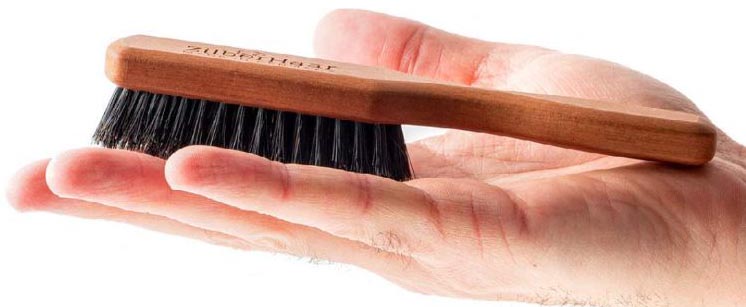
- 100% BOAR BRISTLES: The bristles are carefully selected to ensure the right stiffness to get through even the thickest of beards. Boar hair is known to soften, clean, and distribute oils naturally and effectively.
- SOLID WOOD HANDLE FOR ENDURANCE: Tired of beard brushes not handling your whiskers? A good grip when tending to your stubbles is essential. A luxury product any beard lover should possess as part of his beard care kit.
- MADE FOR EVERY GENTLEMEN: This beard grooming tool is a perfect way to show appreciation to his facial hair. He wont know how to live without a beard brush after he has tried it. The perfect skin care tool for men.