All products are selected by our Beard Stylish editors. If you buy something through our links as an Amazon Associate we earn from qualifying purchases.
When it comes to beard grooming tools, few names carry the heritage and craftsmanship of Kent Brushes. Founded in 1777 in England, Kent is widely considered the oldest comb and brush manufacturer in the world — and their beard combs remain a benchmark for quality nearly 250 years later. Whether you’re managing a short stubble, a full lumberjack beard, or everything in between, using the right Kent comb can transform your grooming routine.
This guide cuts through the noise. We’ll cover what makes Kent combs genuinely different from mass-produced alternatives, how to match the right comb to your beard type, and the correct technique to get the most from your investment.
— ✦ —
Why Kent Combs Are the Gold Standard for Beard Grooming
Not all combs are created equal — and nowhere is that more apparent than when you run a cheap plastic comb through a dry beard. The result is static, breakage, and snagging. Kent combs solve all three problems by design.
Key Takeaway
Kent combs are hand-finished and saw-cut from cellulose acetate, which produces smooth, polished teeth that glide through beard hair without snagging, pulling, or generating static electricity.
The core advantage of a Kent beard comb is its manufacturing process. Rather than being injection-moulded like the vast majority of plastic combs on the market, authentic Kent combs are handmade and saw-cut. The teeth are individually cut and then hand-finished to a smooth, rounded edge. This seemingly simple difference has a profound effect on how the comb interacts with your facial hair and the sensitive skin underneath.
Mass-produced combs, by contrast, have micro-sharp edges where the plastic was moulded — invisible to the eye but very much felt by your skin and hair follicles over time. These edges cause micro-tears in the hair shaft, leading to split ends, frizz, and beard hair that looks dull and feels coarse.
Kent combs are also anti-static. The cellulose acetate material they use carries a different electrical charge profile than standard plastic, dramatically reducing flyaway hairs and beard frizz during grooming. For men with longer or thicker beards, this alone justifies the investment.
What Is a Saw-Cut Comb and Why Does It Matter?
The term saw-cut refers to the traditional method of cutting comb teeth individually using a fine-toothed saw. In the world of grooming tools, this distinction separates artisan combs from factory-moulded ones — and it’s the backbone of Kent’s beard comb superiority.
Here’s what the process achieves:
Benefits of Saw-Cut Construction
- Smooth tooth edges — no sharp plastic burrs that cause hair breakage
- Consistent tooth spacing — even distribution of beard hair for a neat finish
- Rounded tips — gentle on the skin beneath the beard, stimulating blood flow without irritation
- Durability — saw-cut cellulose acetate combs outlast injection-moulded plastic by years
- No static — cellulose acetate is inherently anti-static, taming flyaways naturally
Kent uses cellulose acetate (sometimes marketed as “cellulose” or “acetate”) rather than nylon or standard polystyrene for most of their premium beard combs. This plant-derived polymer has a natural lustre, feels premium in the hand, and is significantly gentler on hair and skin. Some of Kent’s more affordable lines use a hard vulcanite rubber or a quality resin, each with their own grooming benefits for specific beard types.
Kent Comb Types for Beards
Kent produces a range of comb styles, each suited to different grooming purposes. For beard care specifically, you’ll encounter a few key formats.
Handmade Saw-Cut Cellulose Acetate Combs
These are Kent’s flagship beard combs, and the most recommended for serious beard grooming. Available in coarse-tooth, fine-tooth, and dual-tooth configurations, these combs are crafted to professional standard. They suit medium to long beards particularly well, detangling efficiently without pulling at the root.
Folding Beard Combs
Kent’s folding or pocket combs are designed for on-the-go grooming. The teeth fold into a protective case, keeping them clean and sharp. These are ideal for men who travel or need a mid-day touch-up. The compact size suits short-to-medium beards well, and many models retain the saw-cut quality of Kent’s full-size range.
Dual-Sided Beard Combs
Featuring coarse teeth on one side and fine teeth on the other, dual-sided Kent combs are highly versatile. They’re the most practical single-tool option for men who want both detangling and finishing capability. Use the coarse side to work through tangles and distribute beard oil, then switch to the fine side for shaping and smoothing.
Wide-Tooth Detangling Combs
For men with thick, curly, or very long beards, a wide-tooth Kent comb provides the gentlest detangling experience. The wider spacing between teeth means less pulling and less beard-hair stress — important for maintaining the structural integrity of coarser facial hair textures over time.
Choosing a Kent Comb by Beard Type and Length
The best Kent comb for your beard depends heavily on your beard’s length, density, and texture. Here’s how to match the two:
Short Stubble to 1-Inch Beards
For shorter beard lengths, a fine-tooth Kent comb works perfectly. The close-set teeth exert more control over short facial hair, helping you shape a clean neckline and define the edges. A pocket folding comb is also ideal at this length, as portability matters more when your grooming routine is quicker.
Medium-Length Beards (1–3 Inches)
A dual-sided Kent comb is the workhorse for medium beards. Start with the coarse side after applying beard oil to distribute the product evenly and remove any tangles, then finish with the fine side to tame flyaways and create shape. At this length, you’ll benefit most from the anti-static properties of cellulose acetate.
Long and Full Beards (3+ Inches)
Long, thick beards demand a wide-tooth saw-cut comb. Attempting to force a fine-tooth comb through a dense long beard causes breakage and snagging — and with facial hair that’s taken months to grow, that’s a loss worth avoiding. Start from the tips and work your way toward the skin in sections. A Kent wide-tooth comb is also excellent for working beard balm and conditioning products through thick facial hair evenly.
Curly and Coarse Beards
Men with naturally curly or coarse beard texture — common in Afro-Caribbean and mixed heritage grooming routines — benefit from a wide-tooth Kent comb used on damp, product-conditioned beard hair. Attempting to comb dry, curly beard hair causes frizz and breakage regardless of comb quality. Always work with a beard oil or leave-in conditioner.
Quick Reference
Short beards → fine-tooth pocket comb. Medium beards → dual-sided comb. Long or thick beards → wide-tooth saw-cut comb. Curly beards → wide-tooth on damp, conditioned hair.
Kent Beard Comb Comparison
| Comb Style | Tooth Type | Best For | Material | Portability |
|---|---|---|---|---|
| Saw-Cut Cellulose Acetate | Dual (coarse + fine) | Medium–long beards | Cellulose acetate | Home use |
| Folding Pocket Comb | Fine or medium | Short–medium beards, travel | Acetate / resin | Excellent |
| Wide-Tooth Detangling | Coarse, wide-spaced | Long, thick, curly beards | Cellulose acetate | Home use |
| Single Fine-Tooth | Fine | Short beards, styling | Acetate / rubber | Moderate |
| Vulcanite Rubber Comb | Dual | All beard types, sensitive skin | Hard rubber (vulcanite) | Home use |
How to Use a Kent Comb Correctly for Beard Grooming
Even the finest Kent comb delivers poor results with incorrect technique. Here’s how grooming professionals approach beard combing:
Step 1: Apply Beard Oil or Balm First
Never comb a completely dry beard. Work 2–4 drops of beard oil (depending on length and density) into your beard with your fingertips first. This conditions the hair shaft, softens the follicles, reduces friction, and allows the comb to glide smoothly. Combing dry facial hair — especially with a fine-tooth comb — causes unnecessary breakage and static.
Step 2: Start from the Tips, Work Upward
Begin combing at the ends of your beard and work progressively toward the skin. This detangling method — working from tips to roots — prevents the painful snapping of knots against the root that gives beard combing a bad reputation. Take your time, especially in the moustache area where hairs are finer and more prone to tangling.
Step 3: Comb with the Grain, Then Style Against It
Start by combing in the direction your beard hair naturally grows. This aligns the cuticle and smooths the hair shaft. Once detangled, you can lightly comb against or across the grain to add volume and lift. Finish by combing in your desired direction to set the shape.
Step 4: Use the Moustache Side Carefully
The moustache requires its own attention. Use the fine teeth of your Kent comb to train the moustache hairs outward and downward, away from the lips. A small amount of moustache wax applied before combing helps the moustache hold shape throughout the day.
Pro Grooming Tip
- Comb your beard after showering when hair is slightly damp — not soaking wet — for the easiest detangling
- Use your Kent comb morning and evening to train your beard to grow in the desired direction over time
- Clean your Kent comb weekly to remove product buildup and maintain its performance
- Store your comb in a case or pouch to protect the teeth from chipping or bending
Beard Comb Care and Maintenance
A quality Kent comb is an investment — and with proper care, it will last a decade or more. Here’s how to maintain yours:
Cleaning Your Kent Comb
Remove built-up beard oil and product residue by soaking your Kent comb in warm (not hot) water with a small drop of gentle shampoo for five minutes. Use an old toothbrush to clean between the teeth, then rinse thoroughly and pat dry with a clean towel. Allow it to air dry completely before storing. Avoid very hot water, which can warp cellulose acetate over time.
Protecting the Teeth
The saw-cut teeth of a Kent comb are durable, but dropping the comb on a hard floor can chip or crack individual teeth — particularly on the fine-tooth side. Store your comb in a leather or fabric pouch when not in use, and always use a protective case if carrying it in a bag or back pocket.
When to Replace Your Kent Comb
A well-maintained Kent comb rarely needs replacing. However, if you notice a tooth has cracked, chipped, or become misaligned — creating a sharp point — it’s time for a new one. A damaged tooth can scratch your skin and snag beard hair, negating all the benefits of the original handmade quality. Inspect your comb periodically by running it slowly across the back of your hand to feel for any rough spots.
Frequently Asked Questions
What makes Kent combs better than regular beard combs?
Kent combs are handmade and saw-cut from cellulose acetate, meaning each tooth is individually cut and hand-finished to a smooth, rounded edge. This eliminates the microscopic sharp burrs found on injection-moulded plastic combs that cause hair breakage, static, and skin irritation. The cellulose acetate material is also naturally anti-static, taming beard flyaways and frizz more effectively than standard plastic alternatives.
Which Kent comb is best for a long, thick beard?
For long, thick beards, a wide-tooth saw-cut Kent comb is the best choice. Wide tooth spacing allows the comb to pass through dense, long facial hair without pulling or snapping at knots. Start from the tips and work toward the skin in sections, always using a beard oil or conditioning product beforehand. A dual-sided Kent comb with a coarse side is also a strong option for men who want one versatile tool for both detangling and finishing.
Are Kent combs worth the price?
Yes, for most beard growers, a Kent comb represents excellent long-term value. While the upfront cost is higher than a budget plastic comb, a properly maintained Kent comb lasts many years — even decades. The quality of the grooming experience is also significantly better: less breakage, less static, a more comfortable scalp massage effect, and superior styling control. When you factor in the longevity and daily performance, the cost per use is very low.
Can I use a Kent comb on a wet beard?
You can comb a damp beard — and this is often the ideal time, as slightly moist facial hair is softer and more manageable. However, avoid combing a completely soaking-wet beard, as wet hair is more fragile and prone to breakage under mechanical stress. Pat your beard partially dry after showering, apply beard oil or leave-in conditioner, and then comb. Combing a dry beard without any product is the harshest option and should be avoided with fine-tooth combs in particular.
What is the difference between a fine-tooth and coarse-tooth Kent comb for beards?
A fine-tooth Kent comb has closely spaced teeth that provide maximum control and smoothing — ideal for short beards, moustache styling, and finishing longer beards after they’ve been detangled. A coarse-tooth comb has wider gaps between teeth, making it better for detangling, distributing beard oils and balms through thicker hair, and combing long or curly beards without pulling. Many groomers keep both — or opt for a dual-sided Kent comb that provides both in one tool.
How do I clean my Kent beard comb?
Soak your Kent comb in warm water with a drop of gentle shampoo or liquid soap for five minutes. Use a clean toothbrush to scrub between the teeth and remove product buildup. Rinse thoroughly under warm running water, pat dry with a soft cloth, and allow to air dry completely before storing. Avoid hot water, harsh chemical cleaners, or ultrasonic cleaners, as these can damage the cellulose acetate material. Clean your comb once a week if you use beard oil daily.
Are Kent combs suitable for all beard textures, including curly beards?
Yes. Kent wide-tooth combs work very well on curly, coarse, and Afro-textured beard hair. The key is to always apply a generous amount of beard oil or conditioning product before combing, and to work through the hair in sections from tip to root on slightly damp hair. The smooth, rounded teeth of saw-cut Kent combs are particularly important for curly textures, as rougher edges found on cheaper combs cause significantly more frizz, breakage, and discomfort on tighter curl patterns.
Where are Kent combs made?
Kent Brushes was founded in 1777 in England and remains one of the oldest grooming tool manufacturers in the world. Their handmade saw-cut combs continue to be manufactured to traditional British standards, with an emphasis on craftsmanship and quality control. The brand’s heritage and proven track record are key reasons why barbers, grooming professionals, and serious beard enthusiasts continue to trust Kent combs over cheaper mass-produced alternatives.

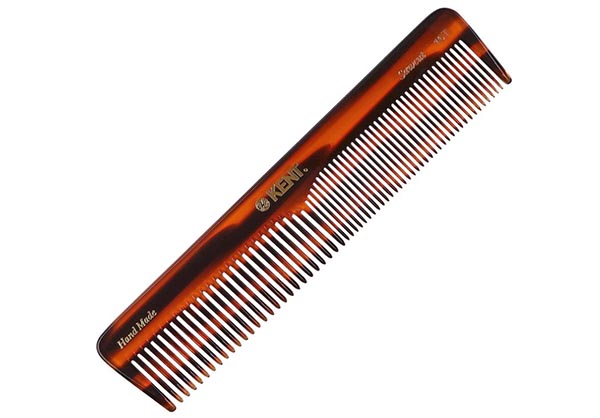
- Dressing Comb: 7.2 Inch Large Double tooth thick and fine, a must to keep in your bathroom, fine tooth for Straightener and finishing and and wide teeth for detangling thick, curly wavy hair. Professional barber haircut Comb for styling and teasing for all hair types, long, wet or curly. Fine toothed and detangler comb for hair, beard and moustache
- Effortless glide: This saw cut, fine toothed comb and wide detangler comb is hand polished and buffed to create soft rounded teeth that will stimulate your scalp or skin. Microscopically smooth teeth stimulate the natural oils inside the hair cuticles as your hair is combed, flexible, durable and waterproof
- Handmade Kent comb: Handmade from a large sheets of cellulose acetate rather than being molded. This material is tactile, flexible and strong, a non-petroleum based derived from plants that has been found to create less static in hair, and is saw-cut to ensure a smooth surface that will not pull or snag hair follicles