
All products are selected by our Beard Stylish editors. If you buy something through our links as an Amazon Associate we earn from qualifying purchases.
Sun protection is non-negotiable for skin health — but if you have a beard, applying sunscreen gets complicated fast. The skin beneath your beard is just as vulnerable to UV damage, premature aging, and skin cancer as the rest of your face. Yet most guides skip beard-specific sun care entirely. Here’s exactly what you need to know.
Why Beard Skin Needs Sun Protection
Facial hair does not provide adequate UV protection on its own. Studies show that a full beard filters only a fraction of ultraviolet radiation, and sparse or short beards offer virtually no meaningful shield. The dermis beneath your beard is thinner than scalp skin, highly vascular, and prone to UV-induced collagen breakdown — meaning sun damage here accelerates wrinkling and discoloration faster than you might expect.
Beyond aesthetics, prolonged UV exposure to unprotected beard skin increases the risk of actinic keratosis and squamous cell carcinoma, particularly on the lower cheeks, chin, and neck — all areas where beard growth is common.
Dermatologists consistently recommend SPF 30 or higher year-round, including on beard-covered areas. The challenge lies in choosing a formula that works with facial hair rather than against it.
What Makes a Sunscreen Work Well With a Beard
Not every sunscreen is formulated with facial hair in mind. The wrong product leaves white residue locked in beard hairs, makes skin feel greasy for hours, or sits on top of the hair shaft rather than penetrating to the skin surface.
Key formulation factors to look for:
Lightweight, fluid texture — Gel-based and serum-style sunscreens disperse through beard hair more easily than thick creams or lotions. Look for terms like “fluid,” “invisible finish,” or “ultra-light” on the label.
Broad-spectrum protection — This means the formula blocks both UVA rays (responsible for aging and deeper tissue damage) and UVB rays (the primary cause of sunburn). Both wavelengths penetrate beard coverage.
Chemical vs. mineral filters — Chemical sunscreens (avobenzone, octinoxate, homosalate) tend to absorb into skin more readily and leave less visible residue in beard hair. Mineral sunscreens (zinc oxide, titanium dioxide) offer superior protection and are less irritating for sensitive skin, but require more thorough application technique to avoid white cast on dark beard hair.
Non-comedogenic formulas — Beard skin is already prone to clogged follicles (beardruff and beard acne are real issues). A non-comedogenic formula reduces the risk of blocked pores under dense facial hair.
Hydrating but not occlusive — Look for hyaluronic acid or glycerin as supporting ingredients. Heavy emollients like shea butter or petroleum derivatives can weigh down beard hair and create a greasy texture that traps debris.
How to Apply Sunscreen to a Bearded Face
Application technique matters as much as product selection. A sunscreen that sits on top of beard hair rather than reaching the skin beneath provides almost no protection.
Step-by-step application:
- Dispense a generous amount — Most people underapply sunscreen by up to 75%, which dramatically reduces effective SPF. For a full beard, use slightly more than the standard quarter-teaspoon recommendation for the face.
- Work it in with your fingertips using a pressing motion — Don’t spread sunscreen across beard hair the way you’d apply moisturizer to bare skin. Instead, press fingertips into the beard and massage in circular motions to push the product through to the skin surface.
- Part the beard where possible — For thicker or longer beards, use a comb or your fingers to part sections and apply directly to the skin in strips before smoothing over the top.
- Don’t forget the mustache area, under the chin, and the neck — These zones are frequently missed and receive high cumulative UV exposure, especially when outdoors.
- Reapply every two hours — Sun protection degrades with time, sweat, and sebum production. Reapplication through beard hair is difficult; a tinted SPF stick or mineral powder sunscreen can make midday reapplication more manageable.
Ingredients to Avoid in Beard Sunscreen
Some common sunscreen ingredients cause problems specifically for beard wearers or for the skin beneath facial hair.
Alcohol (SD alcohol, denatured alcohol) — Common in lightweight spray sunscreens, alcohol can dry out both beard hair and the underlying skin, leading to brittle hair and flakiness that resembles beardruff.
Synthetic fragrance — The skin under dense facial hair has reduced airflow and can be more reactive. Fragrance is a leading cause of contact dermatitis, and reactions here can be particularly uncomfortable and slow to resolve.
Occlusive waxes and silicones — While beneficial in some skin contexts, heavy silicones like dimethicone can coat beard hair and block follicle openings when worked through dense facial hair.
SPF Level Recommendations for Beard Skin
| Beard Density | Recommended SPF | Notes |
|---|---|---|
| Stubble (under 3mm) | SPF 30–50+ | Minimal coverage, treat like bare skin |
| Short beard (3–10mm) | SPF 30–50+ | Work product through to skin surface |
| Medium beard (10–25mm) | SPF 50+ | Use fluid formula, part and press technique |
| Full/long beard (25mm+) | SPF 50+ | Consider targeted stick for exposed zones |
Frequently Asked Questions
Does a beard protect against UV rays? No — a beard does not provide reliable UV protection. Research indicates that even a dense, full beard offers an SPF equivalent of approximately 2 to 21 depending on hair density and thickness. That level of protection is far below the SPF 30 minimum recommended by dermatologists for daily sun protection.
Can I use regular face sunscreen on my beard? Yes, but formulation matters. A regular face sunscreen can work if it has a lightweight, fluid texture that allows it to penetrate through facial hair to the skin surface. Thick creams and tinted formulas tend to sit on hair rather than reaching the skin, reducing their effectiveness.
What type of sunscreen is best for beard skin? Gel-based or serum-consistency chemical sunscreens are generally easiest to apply through beard hair. For those with sensitive or reactive skin, a lightweight mineral formula with micronized zinc oxide is preferable despite requiring more careful blending to avoid white cast.
How do I reapply sunscreen through a beard? Use a mineral powder SPF or a small SPF stick for midday reapplication. These formats are far more practical for reapplying through beard hair without disrupting the beard’s styling or leaving visible residue.
Does sunscreen damage beard hair? Most well-formulated sunscreens do not damage beard hair. However, formulas high in drying alcohols or harsh preservatives can cause dryness and brittleness over time. Choose hydrating, alcohol-free formulas to maintain beard health alongside skin protection.
Should I apply sunscreen before or after beard oil? Apply sunscreen before beard oil. Sunscreen needs direct contact with the skin surface to form an effective protective layer. Applying beard oil first creates a barrier that can prevent sunscreen from reaching skin properly.
Is mineral or chemical sunscreen better under a beard? Both can be effective with correct application technique. Chemical sunscreens are typically easier to apply through beard hair due to their thinner consistency. Mineral sunscreens are better for sensitive or acne-prone beard skin but require more deliberate application to avoid white cast on darker beards.
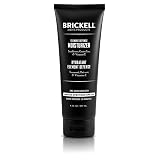
- What It Does: The light, non-greasy sunscreen with SPF45 hydrates, moisturizes and protects your skin against harmful UVA/B rays. Created with powerful ingredients, this SPF moisturizer is easy to rub into your skin without leaving a white residue and won’t clog your pores. Perfect for being outside at the beach, playing sports, or for any extended time outdoors. Now available in easy to dispense tube packaging.
- Who It’s For: Men of any age with any skin type. Men with normal, oily, sensitive, dry, or combo types skin will benefit from this men’s face and body SPF moisturizer.
- How it Works: Zinc oxide SPF45 protects skin from harmful UVA/UVB rays. Sunflower oil helps soothe, strengthen and replenish skin. Green Tea provides robust anti-aging antioxidants to reverse signs of aging. Vitamin E fights free radicals to improve the look of fine lines and wrinkles.