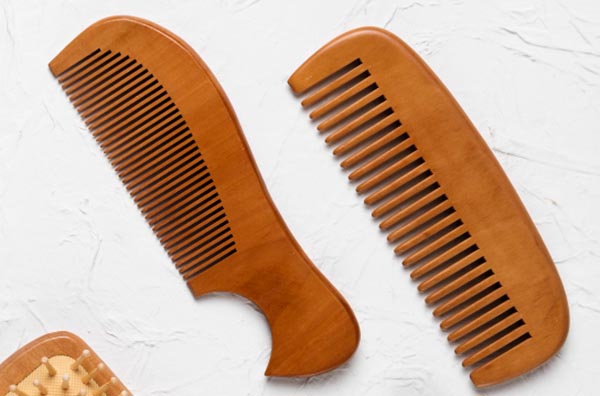
All products are selected by our Beard Stylish editors. If you buy something through our links as an Amazon Associate we earn from qualifying purchases.
If you’re serious about beard grooming, the tool you use matters as much as the products you apply. Wooden beard combs have become the gold standard among barbers, grooming experts, and beard enthusiasts — and for good reason.
Unlike injection-molded plastic combs, which are stamped out with sharp, microscopic seams along each tooth, quality wooden combs are hand-cut or saw-cut with smooth, rounded tooth edges. Those seams on plastic combs snag individual beard hairs, causing split ends, breakage, and frizz over time. A well-crafted wooden comb glides through facial hair without catching, distributing natural oils (sebum) evenly from root to tip while detangling with minimal friction.
From an E-E-A-T perspective: barbers and grooming professionals have long recommended wooden combs as the professional-grade alternative, particularly for medium-to-thick beards where static buildup from plastic creates additional styling challenges.
What to Look for in a High-Quality Wooden Beard Comb
1. Wood Type
The species of wood used determines durability, weight, and how the comb interacts with beard hair.
Sandalwood is arguably the most popular choice. It carries a mild, pleasant natural fragrance, has a naturally smooth grain, and contains trace oils that provide gentle conditioning benefits with each pass through the beard. Sandalwood combs are lightweight and work well for most beard lengths.
Pearwood is denser and heavier, making it exceptionally durable. It resists warping when exposed to beard oils and balms, and the tight grain polishes to an extremely smooth finish — ideal for coarse or thick beards.
Boxwood is prized in traditional comb-making for its fine, even grain. It machines well, holds thin teeth without breaking, and is often used in high-end hand-finished combs.
Bamboo, while technically a grass rather than hardwood, is frequently marketed as a wooden comb alternative. It’s sustainable, lightweight, and affordable. However, bamboo combs vary widely in finish quality — poorly finished bamboo can be rougher than expected.
Olive wood and cherry wood appear in artisanal, handcrafted combs. These are often visually striking but can be harder to source in consistent quality.
2. Tooth Spacing
Tooth spacing is critical and should match your beard’s density and length.
- Fine-tooth combs (teeth spaced 1–2mm apart): Best for short beards, mustaches, and styling the upper lip area. They add definition and remove small tangles.
- Wide-tooth combs (teeth spaced 3–5mm apart): Essential for thick, curly, or long beards. They detangle without pulling and work well when beard conditioner or oil is applied.
- Dual-sided combs: Offer both fine and wide tooth sections in one tool — the most versatile option for most beard types.
3. Finish Quality
Run your fingernail along the teeth. Any roughness, ridges, or sharp edges indicate poor finishing and will damage your beard. Premium wooden combs are hand-finished with fine sandpaper (often 600-grit or higher) and sometimes polished with beeswax or natural oils for an ultra-smooth surface.
4. Size and Portability
Pocket-sized wooden combs (3–4 inches) are ideal for travel and on-the-go grooming. Full-size combs (5–7 inches) provide better control when styling longer beards at home. Many grooming kits include both.
Benefits of Using a Wooden Beard Comb Daily
Reduces static: Wood doesn’t generate the static electricity that plastic combs do, meaning less frizz and more controlled styling.
Distributes beard oil effectively: Combing after applying beard oil ensures even distribution from root to tip, maximizing the conditioning benefit of your product.
Stimulates skin underneath: Regular combing gently exfoliates the skin beneath the beard, reducing beard itch, flaking (beardruff), and ingrown hairs.
Promotes beard growth patterns: Daily combing trains beard hairs to grow in a consistent direction, making your beard appear fuller and more uniform over time.
Eco-friendly and sustainable: Natural wood, especially FSC-certified or sustainably sourced varieties, is a far more environmentally responsible choice than petroleum-derived plastic combs.
How to Care for Your Wooden Beard Comb
Wooden combs require minimal but specific maintenance to last years:
- Keep it dry after use. Don’t leave a wooden comb submerged in water or in a humid bathroom without ventilation. Prolonged moisture exposure warps and cracks wood.
- Condition it periodically. Once a month, apply a small drop of mineral oil, jojoba oil, or beeswax to the comb and wipe off the excess. This prevents drying and cracking.
- Clean gently. Remove trapped hair regularly. For deeper cleaning, use a soft dry brush or a barely damp cloth — never soak it.
- Store properly. A leather pouch or a dedicated grooming kit case protects the comb from drops and humidity swings.
Wooden Beard Comb vs. Beard Brush: Which Do You Need?
Both tools serve different purposes and work best used together.
A wooden beard comb detangles, distributes product, and styles. It’s precise — ideal for shaping the beard’s outline, working through knots, and directing individual sections of hair.
A beard brush (typically boar bristle) exfoliates the skin, lifts and redistributes sebum from the skin upward into the beard, and softens coarser hairs over time.
The professional grooming approach: brush first to stimulate the skin and lift oils, then comb to detangle and style. For beards under one inch, a brush alone often suffices. For beards over two inches, both tools become essential.
Frequently Asked Questions
Are wooden beard combs better than metal combs? Metal combs are durable and easy to sanitize, making them popular in professional barber settings. However, for daily home use, wooden combs are gentler on beard hair and skin. Metal teeth, if not perfectly finished, can snag hairs. Wood’s natural properties — slight warmth, micro-smooth surface, zero static — make it preferable for most users.
Can I use a wooden beard comb on a wet beard? It’s better to comb a damp beard (after towel drying) rather than a soaking wet one. Wet hair is more elastic and prone to breakage under tension. Damp combing with a wide-tooth wooden comb after showering is a good daily habit.
How long does a quality wooden beard comb last? With proper care, a high-quality sandalwood, pearwood, or boxwood comb lasts five to ten years or more. The investment is genuinely long-term compared to plastic combs that warp, discolor, or crack within months.
Will beard oil damage my wooden comb? No — in fact, the natural oils from beard products help condition the wood over time. Just wipe the comb clean after use so product doesn’t accumulate between the teeth.
What beard comb is best for a short beard? For beards under half an inch, a fine-tooth sandalwood comb or a dual-sided comb used on the fine-tooth side gives the most control. Short beards benefit most from precise combing along the cheek line and neckline.
Is bamboo a good alternative to hardwood combs? Bamboo is a reasonable budget option if sourced from a brand that prioritizes finish quality. However, premium hardwood combs — sandalwood in particular — consistently outperform bamboo in smoothness, longevity, and overall beard health benefits.
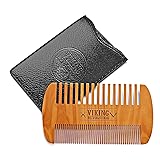
- Find Out What You’re Missing – Find out for yourself, why others are saying this is the best comb they’ve ever come across! This dual sided comb gives the best grooming experience with both its fine and coarse teeth. No static or pulls and great for taking out knots
- Make Her Fall In Love All Over Again – Look and feel your best with a well-groomed beard. She’ll be sure to notice who the king of the jungle is. Works great for any type of beard, long, short, thick or thin.
- Command Attention When You Walk Into The Room – Look and feel like a million bucks! A well-groomed beard will give you the confidence to conquer the world. Comes with a case that makes it easy to carry around without the risk of damaging.