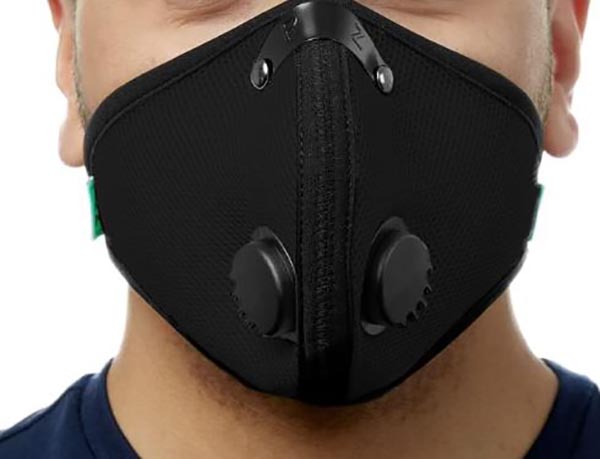
All products are selected by our Beard Stylish editors. If you buy something through our links as an Amazon Associate we earn from qualifying purchases.
Respiratory protective equipment relies entirely on a complete facial seal. When facial hair interrupts the contact surface between the mask and skin, contaminants bypass the filter entirely, entering through the gaps. Studies from the National Institute for Occupational Safety and Health (NIOSH) confirm that even stubble as short as one day’s growth can reduce respirator efficiency by up to 1,000 times the allowable exposure limit for fine particulate matter.
For tradespeople, woodworkers, painters, construction workers, and industrial professionals with beards, this is not a minor inconvenience — it is a genuine occupational health risk. The demand for face fit dust masks for beards has grown substantially as workplaces enforce stricter PPE compliance and workers seek protection that accommodates facial hair without forcing a choice between safety and appearance.
Understanding Face Fit Testing and Why Beards Complicate It
Face fit testing is a standardised process used to verify that a specific respirator creates an adequate seal against an individual wearer’s face. There are two main methods:
Qualitative fit testing uses the wearer’s sense of taste or smell to detect leakage through bitter or sweet aerosol agents introduced around the mask perimeter.
Quantitative fit testing uses a particle counting device to measure the actual concentration of particles inside the mask compared to outside, producing a numerical “fit factor.”
Both methods consistently demonstrate that facial hair in the seal area causes mask failure. Regulations in the UK (under COSHH), the US (OSHA 29 CFR 1910.134), and Australia (AS/NZS 1715) all require workers to be clean-shaven in the sealing zone when using tight-fitting respirators such as FFP2, FFP3, N95, or half-face respirators.
This does not mean bearded workers are without options — it means the type of mask must change.
Types of Dust Masks Suitable for Bearded Wearers
Loose-Fitting Powered Air-Purifying Respirators (PAPRs)
PAPRs are motor-driven units that draw air through a filter and deliver it to a loose-fitting hood or helmet assembly. Because they do not rely on a facial seal, they are inherently compatible with beards of any length. They provide high levels of protection (TH3-rated units in the UK offer equivalent or greater protection than FFP3) and are widely used in construction, abrasive blasting, woodworking, and pharmaceutical environments.
Key advantages for bearded workers:
- No seal requirement
- Continuous airflow reduces heat and improves comfort on long shifts
- Compatible with other PPE including glasses and hearing protection
- Suitable for high-hazard environments
Loose-Fitting Supplied Air Respirators (SARs)
SARs deliver clean air from an external compressor or compressed air line to a loose-fitting hood or visor. Like PAPRs, they eliminate the seal dependency entirely. These are particularly appropriate in confined spaces, spray painting, and environments with oxygen deficiency where a filter-based approach would be insufficient.
Positive Pressure Hoods and Helmets
These are a subset of both PAPR and SAR systems. The positive pressure inside the hood prevents contaminated air from entering even in the absence of a tight seal. Products like the 3M Versaflo and the Sundstrom SR500 series are widely specified for bearded workers by occupational hygienists.
Can Any Tight-Fitting Mask Work With a Beard?
No tight-fitting respirator — including disposable FFP2/FFP3 masks, half-face respirators, and full-face respirators — should be relied upon when facial hair crosses the sealing zone. This applies to:
- Flat-fold disposable masks
- Cup-style P2/P3 masks
- Elastomeric half-masks
- Full-face respirators with cartridge filters
Manufacturers including 3M, Moldex, Drager, and Honeywell explicitly state in their product literature that tight-fitting devices require a clean-shaven face in the sealing area. Some workers attempt to use larger-sized masks or add secondary sealants; these workarounds are not tested, not validated, and should not be used as a compliant solution.
LSI Keywords and What They Tell Us About User Needs
Searches for dust mask for bearded men, respirator for beard, FFP3 mask beard, PAPR for facial hair, and face fit test beard all indicate a single core intent: finding compliant respiratory protection that does not require shaving. Occupational health and safety professionals searching for loose-fitting respirator beard compliance or COSHH beard mask are typically sourcing for workforces and require documented compliance evidence.
Understanding this intent is essential for anyone sourcing PPE: the solution is a category shift, not a product tweak.
Selecting the Right Beard-Compatible Respirator
When evaluating options, consider these factors:
Hazard level — Match the protection factor of the loose-fitting unit to the contaminants present. Consult the Safety Data Sheet (SDS) for each substance and calculate the required Assigned Protection Factor (APF).
Duration of wear — For tasks under 30 minutes, a disposable PAPR hood may be cost-effective. For full shift wear, a reusable system with replaceable filters offers better economics and comfort.
Mobility requirements — Belt-mounted PAPRs allow full freedom of movement. Airline systems tether the wearer but offer unlimited clean air supply.
Compatibility with other PPE — Many PAPR helmets integrate with hard hats, visors, and hearing protection, which is valuable in construction and heavy industry.
Filter replacement schedules — Follow the manufacturer’s service intervals for both particulate and combination filters. Filter saturation reduces protection without any visible indicator in many cases.
Maintenance, Inspection, and Storage
Loose-fitting PAPR and SAR systems require regular maintenance to sustain their protection levels:
- Inspect the hood or helmet for tears, perforations, or damaged visor panels before each use
- Check motor function and airflow rate on PAPRs — a reduction in airflow indicates battery depletion or filter blockage
- Clean non-disposable hoods with manufacturer-approved wipes or solutions — avoid isopropyl alcohol on polycarbonate visors
- Store units away from UV light, ozone sources, and chemical vapours
- Replace filters on a schedule determined by the environment — not just when flow restriction is felt
Maintaining a service log for reusable respiratory equipment supports both regulatory compliance and E-E-A-T principles in workplace safety documentation.
Frequently Asked Questions
Can I use an FFP3 mask if I have a short beard or stubble? No. Even one or two days of stubble growth is sufficient to break the facial seal of a tight-fitting respirator. NIOSH and HSE guidance is consistent: any facial hair crossing the sealing zone disqualifies tight-fitting devices. A loose-fitting alternative must be used.
Do PAPRs filter the same hazards as FFP3 masks? TH3-rated PAPR systems provide a minimum protection factor of 500, which exceeds the APF of 20 for FFP3 disposables. They filter fine particulate matter, and when fitted with appropriate cartridges or combination filters, they also address gases, vapours, and biological aerosols.
Are there disposable dust masks that work for beards? No disposable tight-fitting dust mask is designed or validated for use with beards. Disposable loose-fitting PAPR hoods exist and are compatible with facial hair, but these are powered units, not passive dust masks.
Is it a legal requirement to shave for a dust mask? In regulated workplaces, if the risk assessment specifies a tight-fitting respirator and no suitable loose-fitting alternative is provided, an employer may require workers in high-exposure tasks to be clean-shaven. However, a compliant employer should provide loose-fitting alternatives rather than mandating shaving. Employment law and health and safety law intersect here — consult an occupational hygienist for site-specific guidance.
How do I get a face fit test if I have a beard? A face fit test on a tight-fitting device cannot be validly performed on a bearded worker. If you have a beard, request a loose-fitting PAPR or SAR solution and have the system’s airflow verified by the manufacturer’s recommended method instead.
What protection factor do I need for woodworking dust? Hardwood dust is classified as a Group 1 carcinogen. A minimum of FFP2 (APF 10) is required for light exposure, but FFP3 or TH3 PAPR (APF 500) is recommended for prolonged or heavy dust generation tasks such as sanding, routing, or sawing. Softwood dust requires at minimum FFP1 for short tasks but FFP2 or higher for sustained work.
Can I use a snorkel mask as a dust mask for my beard? Repurposed snorkel or swim masks are not respiratory protective equipment. They are not rated, tested, or designed to filter airborne particulates or hazardous substances. Their use in a workplace context does not constitute compliant PPE and should not be relied upon for protection.

- 100% Cotton
- Imported
- 【Extra-large Size】Ordinary masks can not completely cover the beard, so we designed these extra large size masks for men with beards, it can cover your face while wrapping your beard. Beard face masks are also suitable for people with big faces.