All products are selected by our Beard Stylish editors. If you buy something through our links as an Amazon Associate we earn from qualifying purchases.
If you have a short beard that grows in every direction — curly, wavy, patchy-looking — you already know the frustration. You trim it neatly, only for it to look unkempt by noon. The solution many groomers overlook is a beard straightener for short beards: a targeted heat-styling tool that smooths, defines, and shapes facial hair in minutes, giving even the stubbiest growth a polished, intentional look.
This comprehensive guide covers everything you need to know — from how these tools work and what features to prioritize, to a step-by-step routine and expert safety tips. Whether you have a 5-day stubble, a neat corporate beard, or a short boxed beard, you’ll leave here knowing exactly how to get the most out of a beard straightener.
What Is a Beard Straightener?
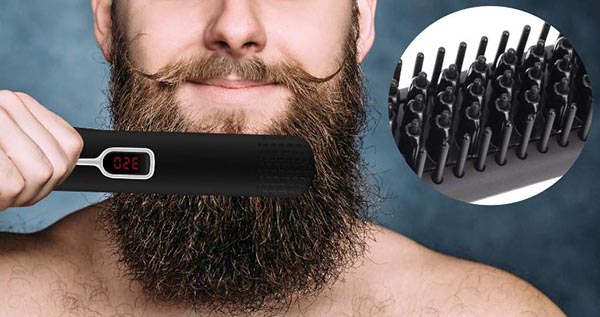
A beard straightener is a heated grooming tool — typically shaped like a flat iron, comb, or brush — designed specifically for facial hair. Unlike regular hair straighteners, the best beard straighteners are built with narrower plates, lower temperature ranges, and rounded edges to safely navigate the curves of the jaw, chin, and neck.
Quick Definition: A beard straightener is a heated tool that uses controlled temperature — usually between 120°C and 230°C (248°F–446°F) — to temporarily restructure the hydrogen bonds in beard hair, straightening or smoothing the strand and reducing frizz and curl.
Modern beard straighteners come in three main form factors: heated flat iron combs, which work like a standard hair iron; heated brush straighteners, which comb and straighten simultaneously; and heated paddle brushes, which suit longer beard styles. For short beards specifically, heated comb-style and brush-style tools tend to offer the most control.
How Does a Beard Straightener Work on Short Beards?
The science is the same whether your beard is two inches or two centimeters. Heat from the straightener temporarily breaks the hydrogen bonds in the keratin protein of each hair strand. As you pull the heated tool through the beard, the strands realign into a straighter configuration. Once the hair cools, it holds that new shape — at least until moisture, humidity, or your next wash resets it.
For short beards, this process is particularly effective because short hairs have less weight than long ones, meaning they spring outward or curl more aggressively relative to their length. A targeted application of low-to-medium heat (typically 150°C–180°C for fine or medium beard hair) can dramatically smooth even the most unruly short growth without requiring multiple passes.
Benefits of Using a Beard Straightener for Short Beards
- Eliminates frizz and flyaways that make short beards look messy and poorly maintained.
- Makes sparse areas appear fuller by laying hairs flat and in a uniform direction, reducing the visual contrast of patchy growth.
- Enhances beard shape definition — crisp necklines and cheek lines stay visible longer when hairs are trained downward.
- Speeds up your morning routine — most short beards can be fully styled in 2–4 minutes.
- Reduces the need for heavy product — straightened beard hairs require less wax or balm to stay put, creating a more natural finish.
- Improves beard softness when used alongside a beard oil or heat protectant, because the straightening process also smooths the hair cuticle.
How to Choose the Right Beard Straightener for Short Beards
Not all beard straighteners are created equal. When shopping for a tool suited to short beard styling, there are several key specifications worth evaluating.
Temperature Range and Control
Look for a straightener with adjustable heat settings that start at or below 150°C (302°F). Short beards — especially fine or thin facial hair — don’t need extreme heat, and a tool that bottoms out at 200°C gives you no room to work safely. Variable temperature control lets you dial in the exact heat your beard type needs.
Plate or Bristle Width
Narrow plates (under 25mm) or tightly spaced bristles provide the precision needed to work through short beard hair close to the skin without burning the face. Wide-plate straighteners designed for scalp hair are awkward and potentially dangerous for beard use.
Ceramic vs. Titanium Plates
Ceramic plates distribute heat evenly and produce negative ions that reduce static and frizz — an excellent choice for most beard types. Titanium heats up faster and reaches higher temperatures, which can be useful for coarse, resistant beard textures but may be overkill for fine short beards. For most users with short beards, ceramic or tourmaline-ceramic is the go-to choice.
Cord Length and Ergonomics
A swivel cord of at least 1.8 metres prevents tangling during use. Ergonomic grip handles reduce hand fatigue, especially important when working around the jawline and chin where precise movements are required.
Auto Shut-Off and Safety Features
This is non-negotiable. Any quality beard straightener should include automatic shut-off after a set period (typically 30–60 minutes), a heat-resistant tip, and an insulated exterior to prevent accidental skin burns.
How to Use a Beard Straightener on Short Beards: Step-by-Step
1
Wash & dry your beard
Clean beard, patted dry. Never straighten wet hair — steam can cause damage and blistering.
2
Apply a heat protectant
A few drops of beard oil or a spray heat protectant shields the hair cuticle from thermal damage.
3
Set the temperature
Start low: 150°C for fine hair, up to 180°C for coarse hair. Less is more for short beards.
4
Work in sections
Start at the sideburns, work toward the chin. Use short, downward strokes following hair growth direction.
5
One pass per section
One slow, steady pass is more effective — and safer — than multiple rapid passes over the same spot.
6
Finish with product
Lock the style with a light beard balm or wax. This extends the straightened result throughout the day.
Expert Tips for Best Results
Pro tip 1Straighten your beard immediately after showering once it is fully dry — this is when beard hair is most pliable and responds best to heat styling.
Pro tip 2Brush your beard with a boar bristle brush before using the straightener. This pre-aligns the hairs and evenly distributes any applied oil, resulting in a more uniform finish.
Pro tip 3For a fuller appearance, direct hairs slightly downward and outward rather than straight down. This creates subtle volume at the sides, making a short beard look denser.
Pro tip 4Limit heat styling to three to four times per week maximum. Daily straightening without adequate conditioning can lead to split ends and brittleness, even on short beard hairs.
Common Mistakes to Avoid
- Straightening a damp beard. Always wait until beard hair is completely dry. Heat plus moisture equals steam damage — and potentially burned skin.
- Using too high a temperature. The most common mistake. For short beards, you almost never need more than 180°C. Higher temperatures increase the risk of breakage and dryness without meaningful styling benefits.
- Skipping heat protectant. Beard oil isn’t just for conditioning — it forms a protective barrier between the hair shaft and the heated plates or bristles.
- Moving the tool too quickly. Rapid passes don’t give the heat enough time to restructure the hair bond. Slow, deliberate strokes produce far better results.
- Neglecting aftercare. Straightened beard hair loses moisture faster than unstyled hair. Always follow up with a conditioning balm or beard butter to replenish lost hydration.
Frequently Asked Questions (FAQs)
Can you use a beard straightener on very short stubble (1–5mm)?
Yes, though results will be subtle at this length. A heated beard brush works better than flat-plate straighteners on stubble because the bristles can engage individual short hairs. You’ll mostly see reduced frizz and a slightly more uniform texture rather than dramatic straightening.
How long does beard straightening last?
Typically 12–24 hours under normal conditions. Humidity, sweating, and washing will reset the hair’s natural pattern. Using a beard balm or light wax after straightening can extend the result significantly.
Will using a beard straightener damage my beard?
Used correctly — with appropriate temperature settings, a heat protectant, and limited frequency — beard straightening is safe for most hair types. Damage typically occurs from excessive heat, daily use without conditioning, or straightening wet hair. Stick to the guidelines in this post and you’ll be fine.
Is a beard straightener different from a regular hair straightener?
Yes. Beard straighteners are specifically designed with narrower plates, lower minimum temperatures, and contoured shapes to safely work around the face. Regular flat irons can technically be used on beards, but their wider plates and higher base temperatures make them less precise and potentially more dangerous for facial skin.
What temperature should I use for a short beard?
Start between 150°C and 170°C (300°F–340°F) for fine to medium beard hair. Coarse, thick beard hair may need up to 180°C. Always start at the lowest effective temperature and only increase if you’re not seeing results after a full pass.
Can a beard straightener help with patchy beards?
Yes — this is one of the most underrated benefits. By training the surrounding hairs to lie flat and in the same direction, a beard straightener minimizes the visual contrast between denser and sparser areas, making patchy short beards appear more uniform and intentional.
Do I need a separate beard straightener if I already have a hair straightener?
Not strictly, but a dedicated beard tool will give you better results. Beard straighteners with comb or brush designs grip short facial hairs more effectively than smooth flat-iron plates, and their shape makes it easier to work close to the skin without risk of burns.
Wrapping Up
A beard straightener for short beards is one of the most practical yet underused grooming tools available. Whether you’re dealing with coarse curls, unpredictable growth directions, or a patchy appearance, the right tool — paired with proper technique and heat-safe aftercare — transforms your short beard from a daily frustration into a style asset.
Focus on choosing a straightener with adjustable low-temperature settings, narrow plates or flexible bristles, and solid safety features. Follow the step-by-step routine above, apply a heat protectant every time, and limit styling to a few times per week. Done right, you’ll spend less time wrestling with your beard and more time enjoying the results.

- 3 HEAT LEVELS – Our beard comb heats up in 30 seconds to provide several heat levels to match your hair type – 300°F for thin hair, 355°F for medium and wavy hair, and 400°F for thick and curly hair. One-touch heat adjustment makes it super easy to use!
- SINGLE STROKE TECHNOLOGY – allows you to save a significant amount of time grooming and perfecting your beard with a single brush stroke. Our variable heat gauge and ION technology allows you to groom and tame any beard in a flash. This technology has been tested vigorously in every beard straightening brush
- REDUCES FRIZZ – Using advanced ionic technology, this heated beard brush for men works to get rid of frizz and lock in moisture for smoother, healthier results for your beard.